Look at Xiao Xiao—whose name means “Little” in Mandarin—calmly resting during his skin treatment and grooming on graduation day. Just 30 days earlier, this 100-lb Alaskan Malamute was considered untouchable.
The Trauma and the Spiral When Xiao Xiao was one year old, a single traumatic, forceful grooming experience shattered his trust in human hands. Over the next few years, his panic escalated into severe defensive biting—injuring seven people with Dunbar Level 4 bites, including his guardian and her father.
For more than two years, he was blacklisted by grooming salons across three major cities (Guangzhou, Shenzhen, and Zhuhai). Left with no other option, his guardian tried bathing him at home. Because Alaskan Malamutes have dense double coats, bathing without high-velocity drying equipment in humid weather left his undercoat damp, triggering chronic, painful dermatitis across his back. Every touch hurt, and every painful touch made him fight even harder to protect himself.
By the time he came to me, three grown men could not physically hold him still. He had learned that his size and teeth were the only shield he had left.
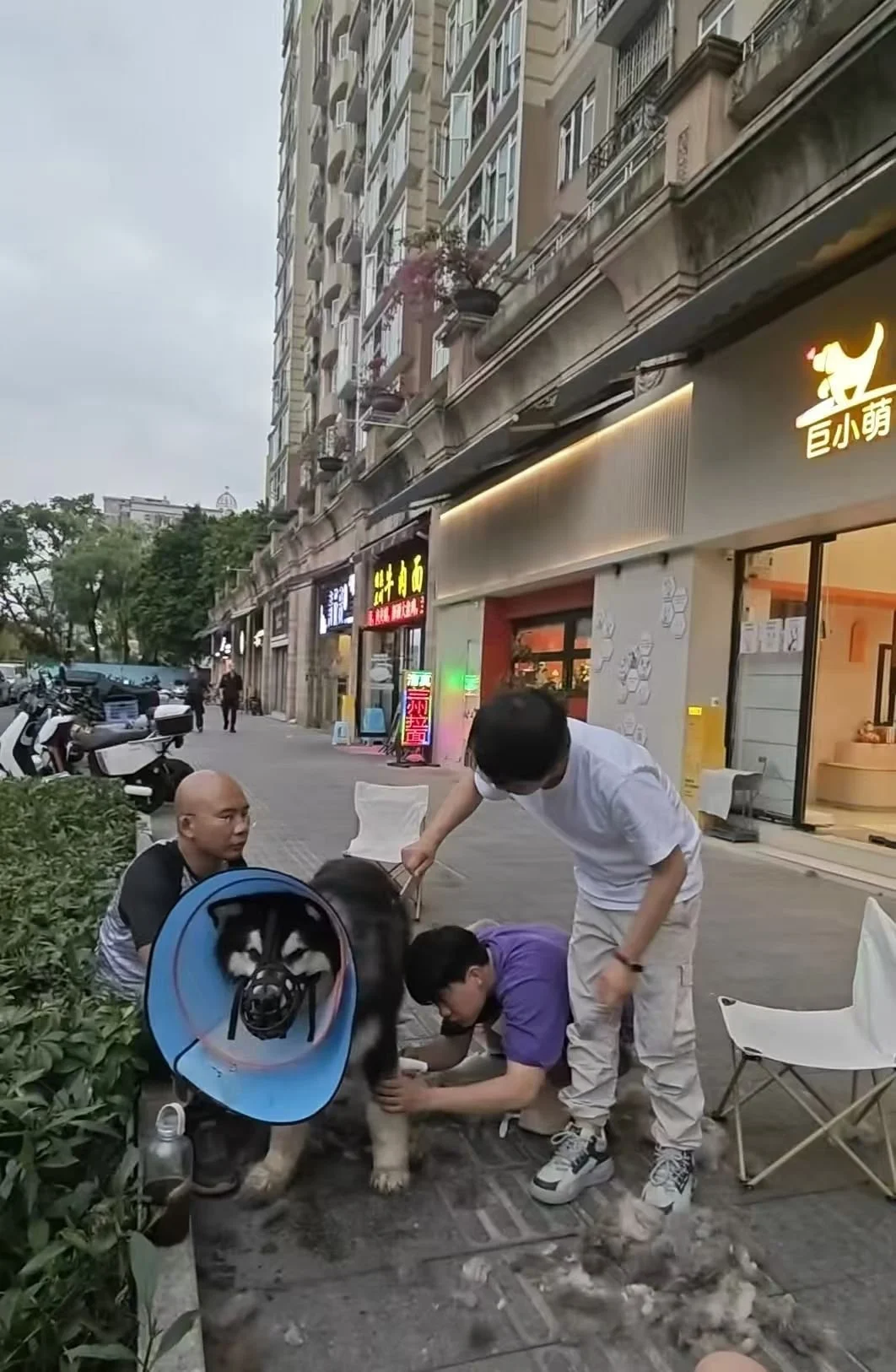
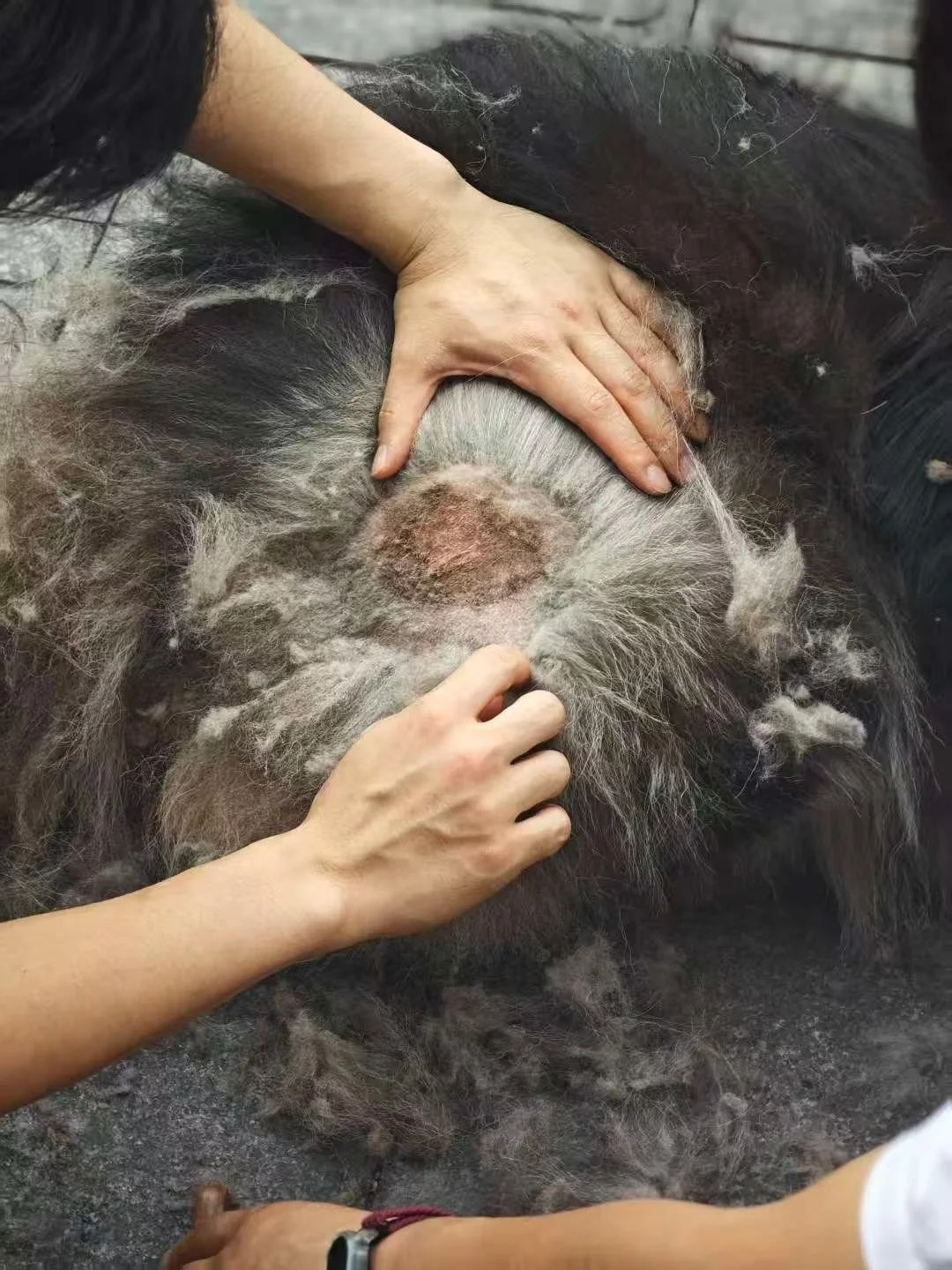
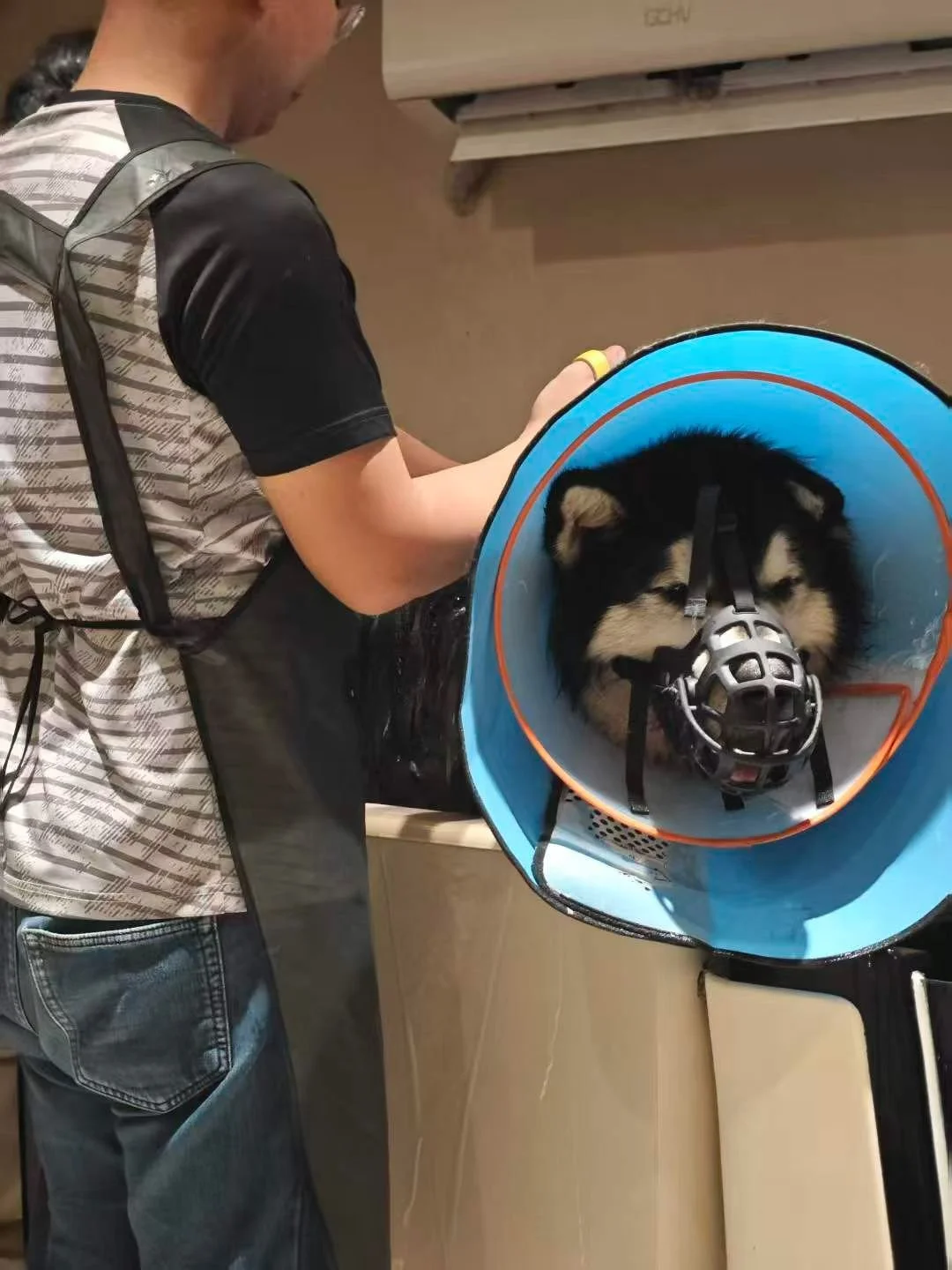
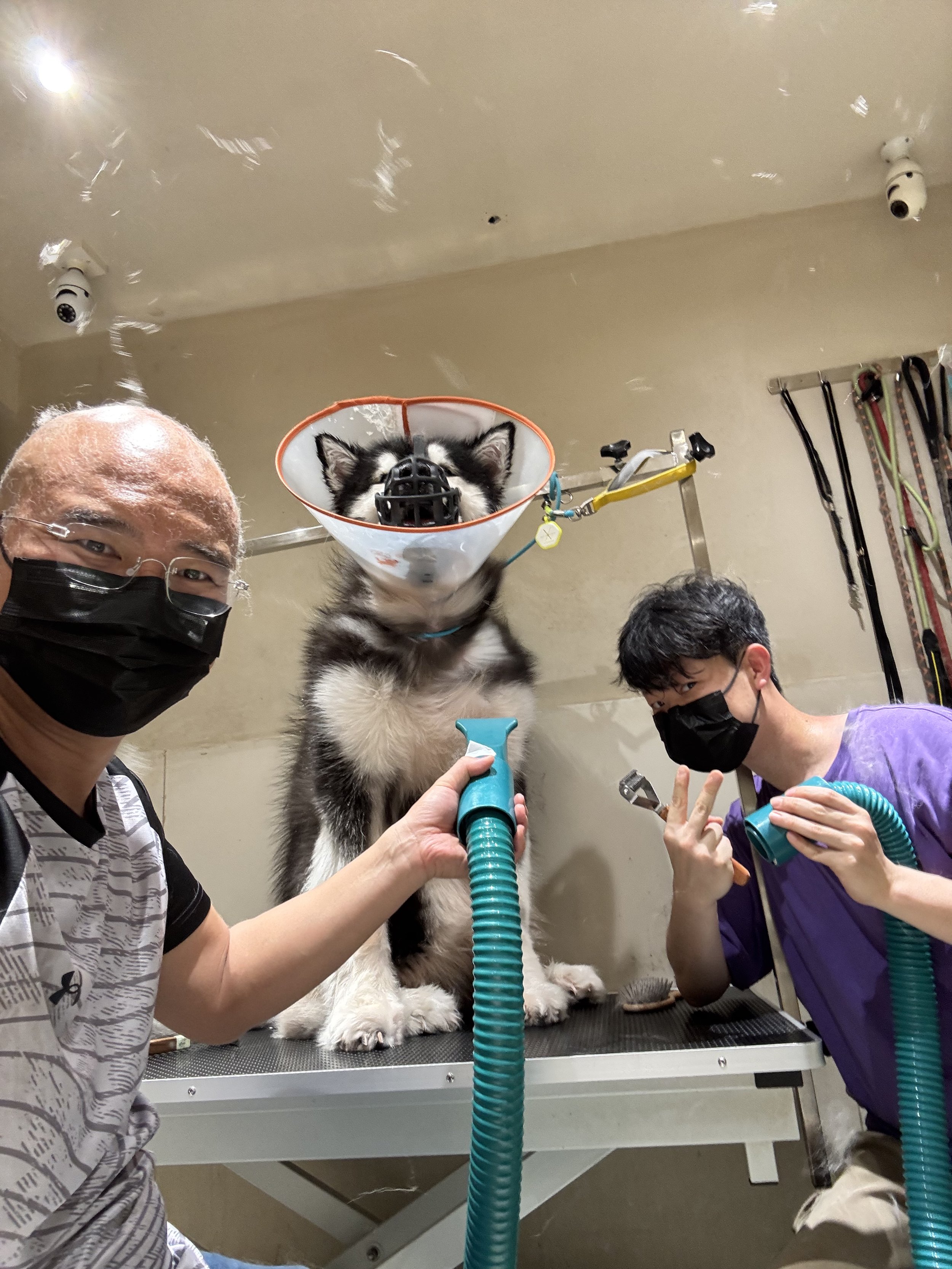
Why Force Failed Trying to overpower a 100-lb northern breed with muscle is both dangerous and futile—which is why traditional, correction-based methods had completely failed him. Punishment never heals fear; it only confirms to a terrified dog that human hands are a threat, and often suppresses warning growls until a dog bites without warning.
The 30-Day Cooperative Care Protocol Instead of fighting Xiao Xiao’s defensive instincts, we rebuilt the relationship from the ground up using Positive Reinforcement (R+), TTouch bodywork, and Cooperative Care:
1. Respecting Boundaries First: We stopped all non-consensual handling immediately. Using a clicker and high-value rewards, we paired human approach with calm, predictable outcomes so his nervous system could finally step down from high alert.
2. Voluntary Muzzle Conditioning: Safety mattered for everyone, but forcing a muzzle over his head would have re-triggered his trauma. Through step-by-step free shaping, Xiao Xiao learned to voluntarily place his nose into the muzzle for treats—even waiting calmly for the strap to buckle.
3. Sub-Threshold Grooming Desensitization: Starting from his least sensitive areas (chest and neck) with gentle TTouch strokes, we broke water, towels, brushes, and the sound of the velocity dryer into tiny, manageable steps below his stress threshold. By week three, a single handler could bathe him, apply his medicated skin treatment, and towel-dry him while he rested peacefully.
4. The 5-Second Consent Test & Family Handover: We introduced a clear rule: touch for five seconds, then pause and step back. If Xiao Xiao leaned in or looked softly toward my hand, we continued; if he turned away, we paused. Giving him a safe way to say “no” is what finally made him comfortable saying “yes.” From there, we coached his family through the exact same routine so the trust carried home.
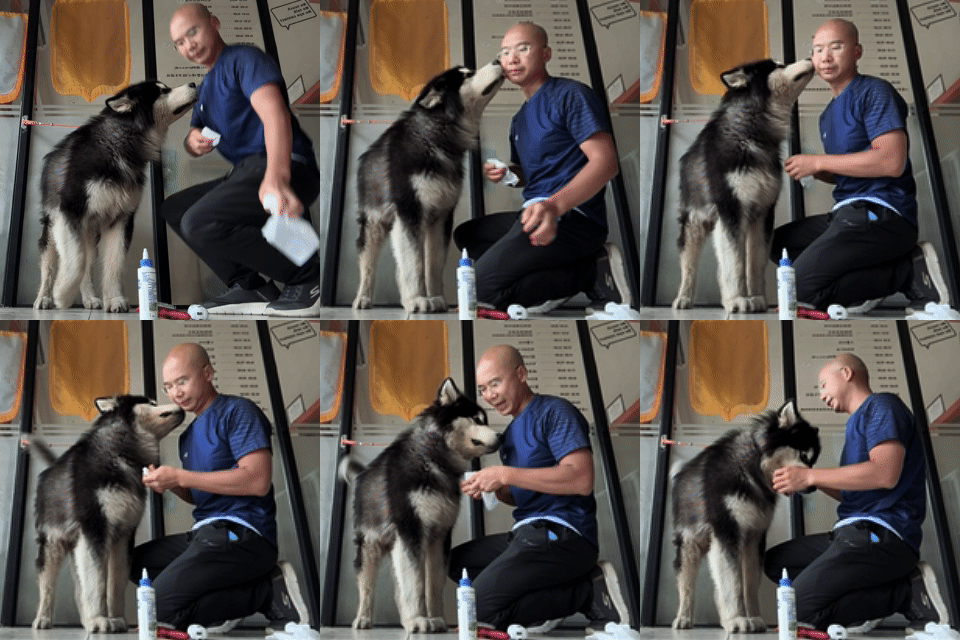
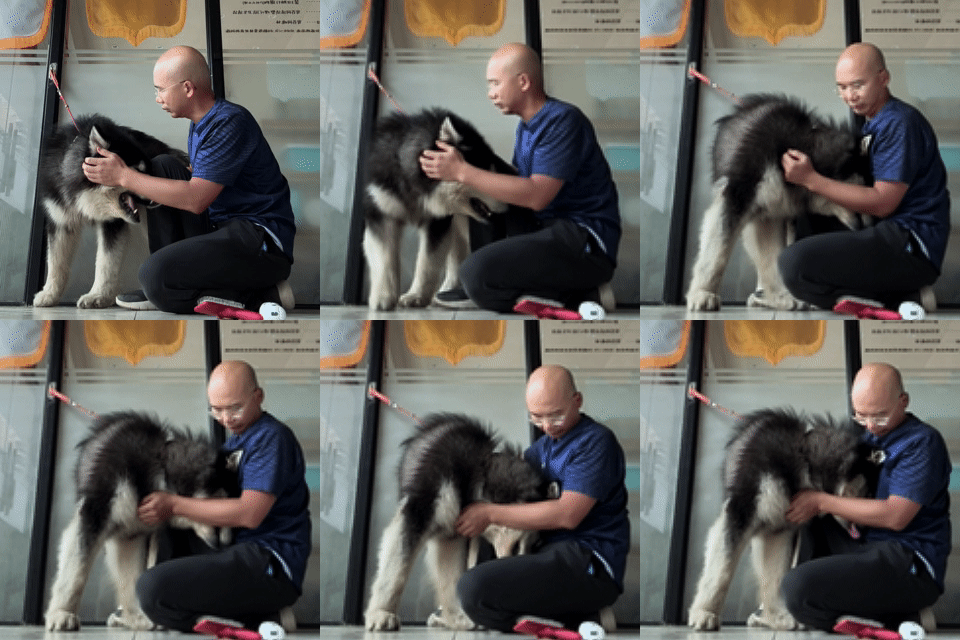
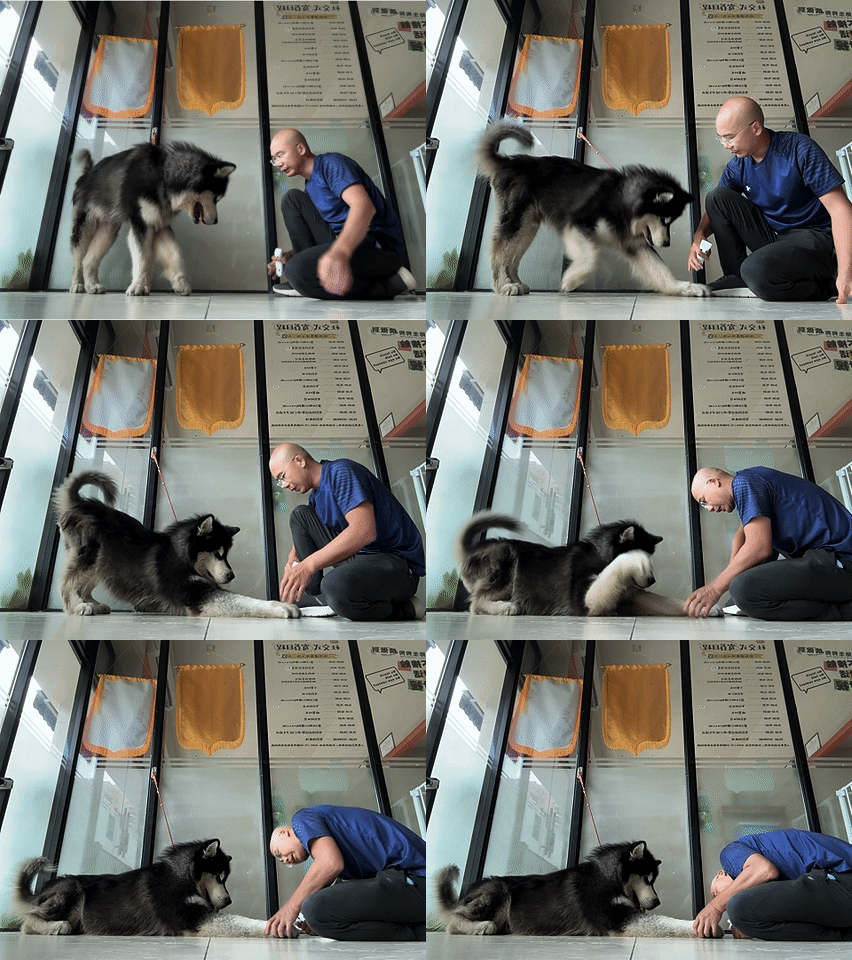
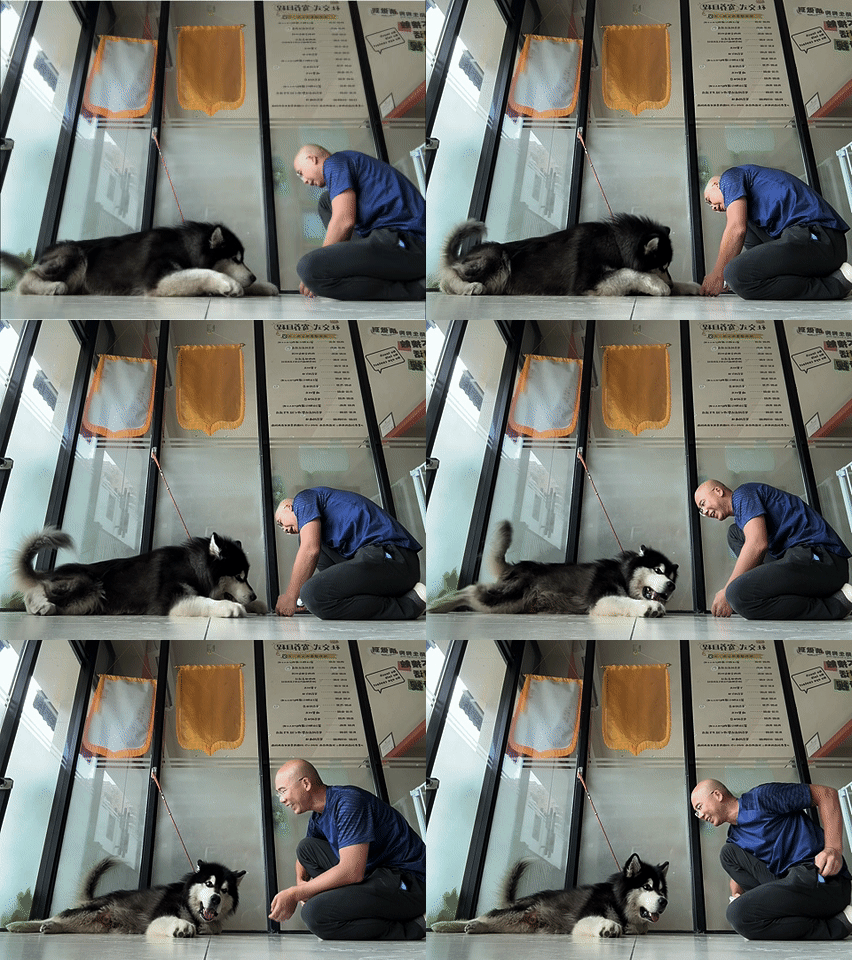
Where He Is Today Today, Xiao Xiao has moved to a new city. He walks into new grooming salons with new groomers without defensive aggression, his skin has healed, and he lives peacefully alongside the very family members he once injured.
Does your dog struggle with handling sensitivity, grooming panic, or a bite history? Defensive biting is rarely about malice—it is almost always a cry for safety or relief from pain. Explore our L3 · Bite & Handling Rehab program on the Services page, or reach out via our Contact page to schedule a complimentary 30-minute in-person Meet & Greet here in San Francisco.